


Email marketing continues to be one of the best-performing channels in digital marketing even in 2026. Whether you have a blog, affiliate website, e-commerce site, consultancy service, or YouTube channel, your choice of the email marketing tool could make or break your business.
Currently, two of the best platforms for email marketing include Mailchimp and ConvertKit.
The million-dollar question that many beginners ask is:
Mailchimp vs ConvertKit – Which Email Marketing Tool Do You Choose?
Both tools have almost similar features such as:
• Email campaigns
• Automation
• Landing pages
• Subscriber management
• Analytics
• Integrations
However, the key differences are seen when it comes to:
• User-friendliness
• Power of automation
• Creator tools
• Pricing
• Affiliate marketing capabilities
• Scalability of the business
This article will give you a detailed comparison between these two platforms.
Both Platforms Overview
What Is Mailchimp?
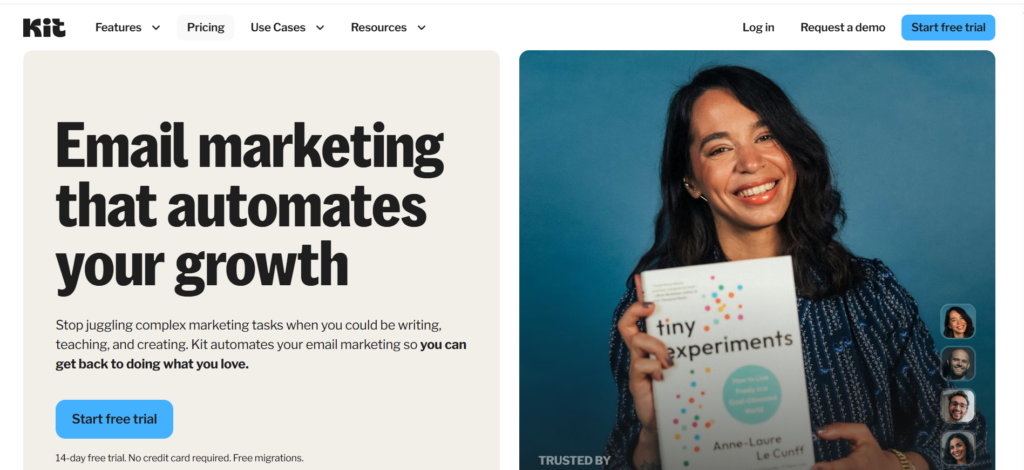
Mailchimp is one of the most reputable email marketing software around the globe.
It can be found among the users of:
• Small businesses
• E-commerce brands
• Agencies
• Local businesses
• Marketing teams
Among the features of Mailchimp are:
• Attractive templates
• Drag-and-drop editor
• In-depth reports
• E-commerce integration
• Multichannel marketing
Good for
• E-commerce stores
• Businesses with brand identity
• Teamwork when running big campaigns
• Needing lots of integrations
What Is ConvertKit?
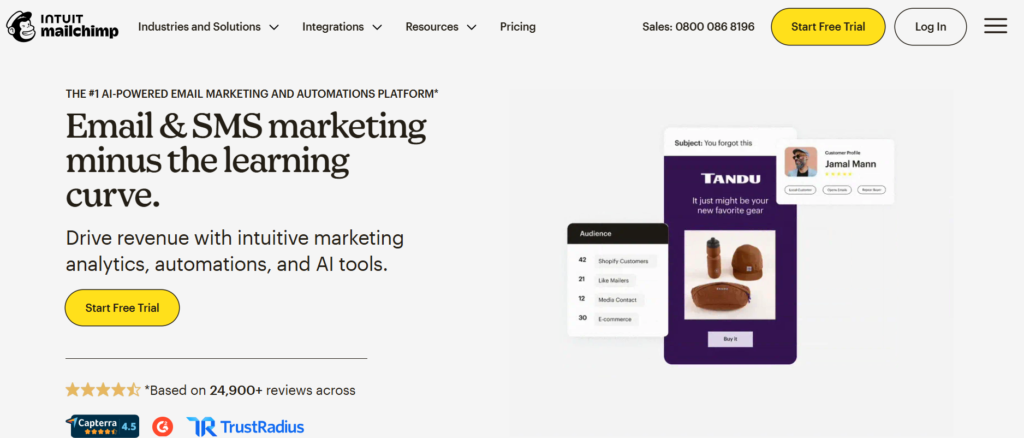
ConvertKit (as well as the sister-branded Kit) is an email marketing software specifically designed for creators.
The following are the target audience of ConvertKit:
• Bloggers
• Affiliates
• Coaches
• Course creators
• YouTubers
• Newsletter business owners
Among the key selling points of ConvertKit are:
• Simplicity
• Email automation
• Segmentation
• Creator monetization tools
• Landing pages
Good for
• Content creators
• Affiliates
• Personal brands
• Online educators
Mailchimp vs ConvertKit
| Feature | Mailchimp | ConvertKit |
| Ease of Use | Moderate | Very Easy |
| Email Templates | Excellent | Simple |
| Automation | Good | Excellent |
| Affiliate Marketing | Limited Friendly | Highly Friendly |
| Ecommerce Tools | Excellent | Basic |
| Landing Pages | Good | Very Good |
| Deliverability | Strong | Strong |
| Pricing | Can become expensive | Better scaling |
| Best For | Businesses & Stores | Creators & Bloggers |
| Learning Curve | Medium | Beginner-Friendly |
Start with ConvertKit Free Plan
Comparison of Ease of Use
MailChimp User Experience
MailChimp is packed with many tools within its single dashboard:
• Email marketing campaigns
• Social media advertisements
• Customer relationship management system (CRM)
• Automation
• Analytics
• Websites
• Landing pages
Despite these benefits, beginners can find the platform complex at first.
Strengths
• Professional dashboard
• Advanced customization
• Visual editor for email marketing
• Campaign tools
Weaknesses
• Too many features for newbies
• The navigation process is somewhat complicated
• Automations require a lot of setup time
ConvertKit User Experience
ConvertKit’s interface is simple to navigate.
It is sleek and minimalist.
Even inexperienced users can easily:
• Create automations
• Build forms
• Send broadcasts
• Add tags to subscribers
within just a few minutes.
Strengths
• Minimalistic dashboard
• Short learning curve
• Simple automation builder
• Beginner-friendly workflows
Weaknesses
• Limited visual customizations
• Few email design templates
Winner: ConvertKit
For simplicity and ease of use, ConvertKit stands out as the better option.
Comparison of Email Templates and Design
MailChimp Email Templates
One of MailChimp’s strongest suits.
Features include:
• Up-to-date templates
• Drag-and-drop functionality
• E-commerce templates
• Brand customization
• Visual campaign builder
Automation Comparison
The main factor influencing the choice between Mailchimp and ConvertKit is automation.
Mailchimp Automation
The following options are available for Mailchimp:
• Customer journeys
• Behavioral automation
• E-commerce automation
• Welcome sequences
But complicated automation might be difficult to comprehend.
Good For
• Marketing in stores
• Abandoned cart campaigns
• Special campaigns
ConvertKit Automation
ConvertKit is focused on automation.
It allows you to use visual automation tool which is really easy-to-use.
It helps you to:
• Use tags
• Build funnels
• Send automated emails
• Segmented your audience
• Turn events into actions
These features make it very handy for affiliate marketers and creators.
Winner: ConvertKit
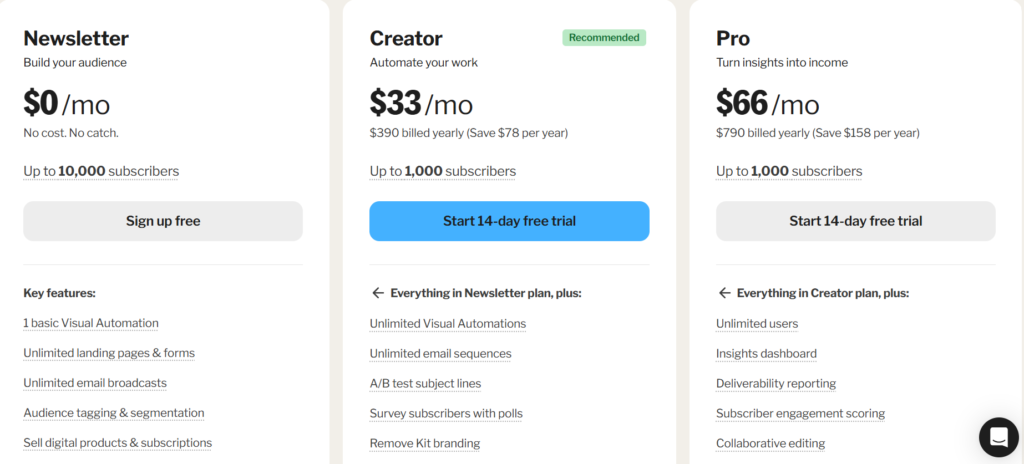
Pricing Comparison
Pricing becomes critical to consider as the number of subscribers increases.
Mailchimp Pricing
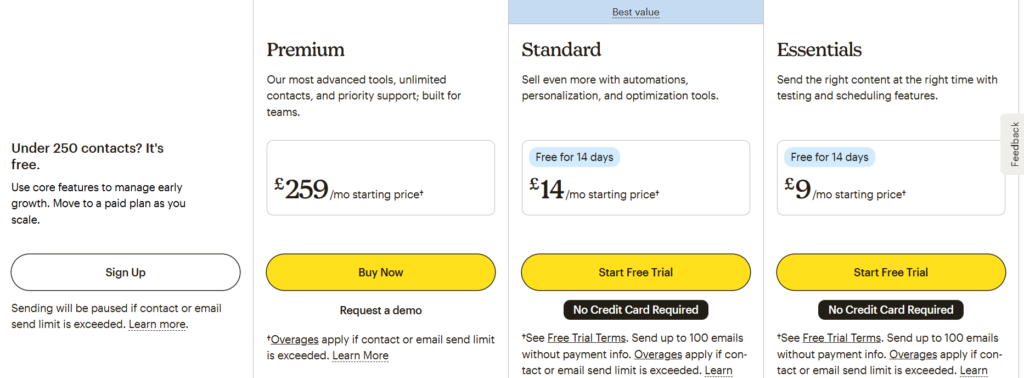
Mailchimp offers a free tier, but prices jump significantly depending on the number of subscribers.
Mailchimp Pros
• Free initial tier
• Multiple in-built tools
• Prefers businesses
Mailchimp Cons
• Pricy scaling
• Inactive contact charges
• More expensive premium features
ConvertKit Pricing
ConvertKit has a free tier, and prices are more reasonable compared to Mailchimp when scaling.
ConvertKit Pros
• Better automation value
• Transparent pricing for creators
• More manageable scaling
ConvertKit Cons
• Premium features may be costly
• Fewer in-built marketing tools
Winner: ConvertKit
ConvertKit is often a better pick for creators and affiliate marketers.
Start with ConvertKit Free Plan
Performance & Email Deliverability
The deliverability will determine if your emails get delivered successfully.
Both email services work effectively.
Mailchimp Performance
Mailchimp:
• Has robust infrastructure
• Provides reliable delivery rates
• Has enterprise level systems
Nonetheless, affiliate marketers complain about restrictive policies.
ConvertKit Performance
ConvertKit:
• Proven excellent inbox delivery
• Has friendly policies for creators
• Has proven effective engagement systems
Winner: ConvertKit
Specifically for newsletter subscriptions and affiliate marketing.
Integrations Comparison
Mailchimp Integrations
Mailchimp integrates with several business platforms, including:
• Shopify
Affiliate Marketing Friendliness
This factor is extremely important for bloggers and niche site owners.
Mailchimp Affiliate Policy
Mailchimp can be strict with campaigns that heavily rely on affiliates.
Some users have noted account reviews or restrictions in cases where there is aggressive promotion of affiliate offers.
ConvertKit Affiliate Policy
ConvertKit is extremely friendly to creators.
The platform works great for:
• Affiliate marketing emails
• Digital product selling
• Education funnels
• Creator monetization
Winner: ConvertKit
One major reason affiliate marketers love ConvertKit.
SEO and Content Marketing Friendliness
While email marketing tools are not SEO tools themselves, they help with traffic and audience building.
Mailchimp SEO Friendliness
Mailchimp comes with:
• Site builder features
• Landing pages
• Basic SEO functionalities
Suitable for small business marketing ecosystems.
ConvertKit SEO Friendliness
ConvertKit performs better for:
• Content funnel marketing
• Blog subscribers
• Creator monetization
• Newsletter SEO traffic conversion
Winner: ConvertKit
Particularly useful for content creators and bloggers.
Summary
Pros of Mailchimp
• Powerful templates
• E-commerce integrations
• Advanced analytics
• Extensive integration ecosystem
• Reliable global service
Cons of Mailchimp
• Expensive when scaling
• Complicated interface
• Lacks creator-specific functionality
• Less affiliate-friendly
Pros of ConvertKit
• Easy to use
• Automated workflows
• Friendly to creators
• Excellence in affiliate marketing
• Effective personalization
Cons of ConvertKit
• Visual templates are limited
• Few advanced design features
• Not ideal for large e-commerce sites
Which Tool Should You Pick?
It is the crucial point in the comparison between Mailchimp and ConvertKit.
Pick Mailchimp If:
• You run an e-commerce website
• You want to create complex email designs
• You need business-oriented marketing software
• You are into visual branding campaigns
• You require multiple business integrations
Best Candidates
• Shopify e-commerce websites
• Agency businesses
• Enterprise-scale corporations
• Product-oriented firms
Select ConvertKit If:
• You are a blog owner
• You operate an affiliate marketing website
• You produce content online
• You sell digital products
• You need automated workflows
Best Candidates
• Affiliate marketing agencies
• YouTube content creators
• Online mentors
• Newsletter creators
• Educators with online classes
Real-World Recommendation
In most cases, ConvertKit will be a better choice in 2026 due to:
• The simplicity factor
• Higher ease of use for automation
• Better creator monetization potential
• Better results from email personalization
Nonetheless, Mailchimp is extremely effective in its niche as well.
Conclusion: Mailchimp vs ConvertKit
Comparing Mailchimp vs ConvertKit, one cannot determine an outright winner.
Choosing the right tool depends on your needs and preferences.
Recommendation
Use Mailchimp when:
• You have an emphasis on design
• Your marketing campaigns use ecommerce sales
• You require professional business marketing tools
Test Mailchimp Free Plan for their templates and marketing functionalities.
Use ConvertKit when:
• You are a creator or blogger
• Your marketing campaign relies on affiliate marketing
• Automation is important to your business
• You appreciate a clean, simple process
Consider starting with ConvertKit Free Plan if you are looking for marketing tools for creators.
Conclusion
Making a decision about Mailchimp vs ConvertKit depends on knowing your business model.
If you are developing:
• Creator brand
• Newsletter business
• Affiliate site
• Content-based audience
then using ConvertKit makes more sense.
If you are handling:
• Ecommerce marketing campaigns
• Branded newsletters
• Business marketing campaigns
then using Mailchimp makes sense.
| User Type | Recommended Tool |
| Beginners | ConvertKit |
| Bloggers & Creators | ConvertKit |
| Small Businesses | Mailchimp |
| Ecommerce Stores | Mailchimp |
| Affiliate Marketers | ConvertKit |
| Advanced Automation | ConvertKit |
| Design-Focused Campaigns | Mailchimp |
| Budget-Friendly Scaling | ConvertKit |
Final Quick Recommendation
• If you prefer templates, e-commerce, and brand-based campaigns, opt for Mailchimp.
• ConvertKit is better suited for those who prioritize content generation, affiliate marketing, email newsletters, and easy automation.
Start with ConvertKit Free Plan