


These days, many businesses face challenges with inefficiency, missed deadlines, and non-accountability. No matter whether you’re running a start-up, manage a consultancy business, or teach students, one of the issues you definitely meet is how to keep everything coordinated. You may use emails, WhatsApp, or excel tables to handle all these tasks, but sooner than later, it turns out that these practices won’t suit your needs anymore.
In such a case, one thing you definitely need is the Top Project Management Tools for Teams. Using them, you can manage any task more effectively and communicate properly. Having worked together with students, professional, and civil servants, I could see that teams which are using the structure of project management perform better than teams with no structure.
Here, you will learn about the most effective project management tools, their benefits, features, how to use them and select the proper tool for your team. At the same time, it is worth mentioning that the guide is aimed at making sure that all your expectations will be met when publishing an article on AdSense or affiliates sites.
Why Do You Need Project Management Tools?
The purpose of using project management tools does not end at task assignment. The tools allow setting up structures which increase efficiency and enhance performance. With the tools, teams will be able to communicate effectively, manage their time efficiently, and become more accountable.
In both the educational and professional environment, one of the major drawbacks is the inability to structure things. In an educational context, it is common for students in group assignments to fail due to unclear role allocation. Likewise, workers in organizational settings might repeat each other’s job or delay work due to ineffective collaboration. The tool addresses this problem by ensuring all actions are coordinated.
Additionally, there is transparency since managers will be able to track project development and correct any inefficiency along the way. This is very essential in consultancy and training projects.
Top Project Management Software For Teams
1. Trello
Trello is a visual project management software which makes use of boards, lists and cards.
Features:
• Drag & drop task management
• Kanban-style boards
• Easy collaboration
• Integration with other software such as Google Drive and Slack
Pros:
• Highly user-friendly
• Great for beginners
• Very visual and intuitive
Cons:
• Lacks advanced functionality
• Not suited for complex projects
Useful for:
• Small teams
• Students and beginners
• Simple task management
Try Trello if you need a highly visual and beginner-friendly project management tool.
2. Asana
Asana is a powerful project management software for task tracking, workflow automation and collaboration.
Features:
• Task assignment and deadline setting
• Workflow automation
• Timeline and calendar views
• Project reporting
Pros:
• Highly organized task management
• Good for medium-sized to large teams
• Enhances accountability
Cons:
• Slight learning curve
• Advanced features cost money
Useful for:
• Growing teams
• Entrepreneurial startups
• Professional project managers
From my professional experience, Asana is very useful in professional settings where accountability is a must.
Sign up for Asana now to enhance your workflow.
3. Monday.com
Monday.com is a highly customizable work operating system designed to handle projects, workflows, and other regular works.
Features:
• Custom workflows
• Dashboards
• Automation options
• Tracking time
Advantages:
• Highly customizable
• Extremely intuitive visuals
• Can scale up with any team size
Disadvantages:
• Quite expensive
• Complicated for new users
Recommended for:
• Large teams
• Businesses with complicated workflows
• Agencies/Consultancy
In my consultancy experience, solutions such as Monday.com are great for organizations managing several projects at once.
Get started with Monday.com for free to simplify complex projects.
4. ClickUp
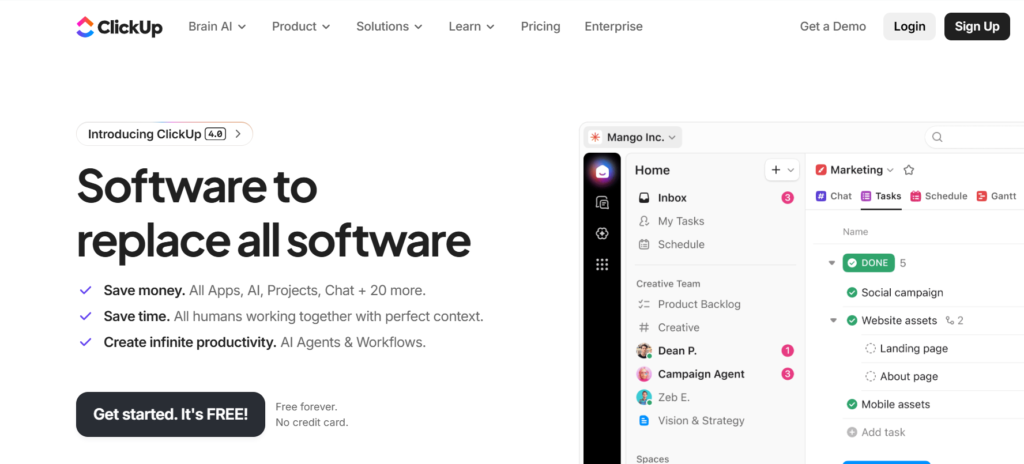
ClickUp is an all-in-one productivity platform including tasks, documents, goals, and chat.
Features:
• Tasks management
• File sharing
• Goals tracking
• Tracking time
Advantages:
• All in one place
• Not expensive
• Highly customizable
Disadvantages:
• Possibly overwhelming for starters
• Complex-looking interface
Recommended for:
• Small companies who do not want several tools
• Self-employed people
• Concentrating on being productive
With my teaching experience in productivity platforms, ClickUp offers a great set of functions; however, users need proper onboarding.
Try ClickUp today to consolidate everything you do as a team.
5. Notion
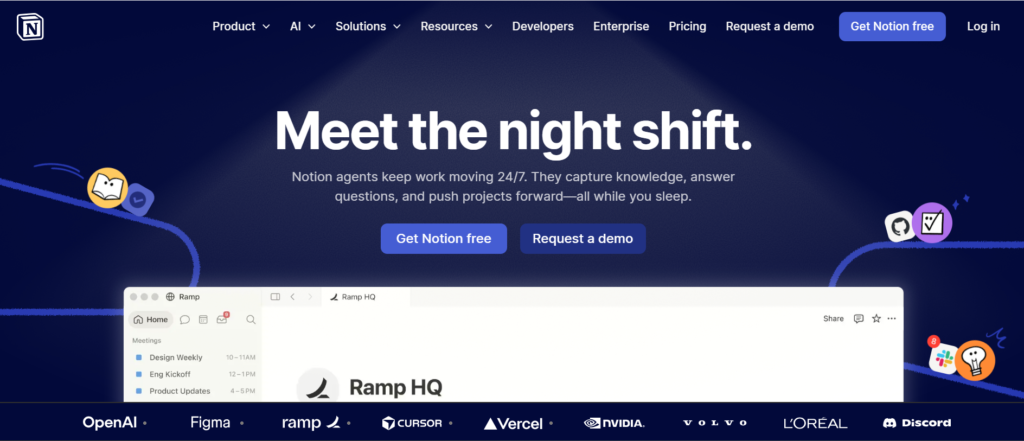
Notion is an adaptable platform to take notes, create databases, and manage projects.
Key Features:
• Take notes
• Task Management
• Database Creation
• Team Collaboration
Benefits:
• Very versatile
• Able to manage knowledge
• Joins notes and task together
Disadvantages:
• Necessitates setup
• Doesn’t specialize in project management
Ideal for:
• Content Creators
• Students and Teachers
• Teams focused on Knowledge
From my experience in teaching, Notion is ideal for managing classes and assignments.
Try Notion for free now.
6. Jira
Jira is a project management tool made for software development.
Key Features:
• Project Management using Agile principles
• Bug and Issue Tracker
• Sprint Planning
• Advanced reporting
Benefits:
• Ideally suited for developers
• Adept in Agile Project Management
Disadvantages:
• Does not suit beginners
• Difficult to understand
Ideal for:
• Software Development Team
• Agile Projects
Use Jira if you develop software.
Comparison Table: Top Project Management Tools for Teams
| Tool | Pricing (Starting) | Best For | Ease of Use | Key Strength |
| Trello | Free / Paid | Beginners & small teams | ⭐⭐⭐⭐⭐ | Simplicity |
| Asana | Free / Paid | Growing teams | ⭐⭐⭐⭐ | Task management |
| Monday.com | Paid | Large organizations | ⭐⭐⭐⭐ | Custom workflows |
| ClickUp | Free / Paid | All-in-one productivity | ⭐⭐⭐⭐ | Versatility |
| Notion | Free / Paid | Content & knowledge work | ⭐⭐⭐⭐ | Flexibility |
| Jira | Free / Paid | Developers | ⭐⭐⭐ | Agile tools |
How to Choose the Right Tool
The selection of the right tool will depend on your team’s requirements.
Remember to Consider the Following:
• The number of people in your team
• Complexity of your projects
• Budget
• Usability
Practical Recommendations:
• Choose simple tools (like Trello or Notion) first
• Escalate to more advanced tools with the growth of your team
• Don’t try to force too much functionality in the chosen tool
In my practice as an adviser to teams, many organizations struggle with tools, but only because they selected a wrong one for their needs.
Expert Tips (Based on Personal Experience)
According to my experience collaborating with students and other professionals who undergo training programs:
• Simple tools are best suitable for beginners
• Structural tools (e.g., Asana) enhance accountability
• More advanced ones (Monday.com) are ideal for companies
• The same level of effort should be invested in training teams as selecting tools
Not a tool makes a difference it’s its usage that matters.
Conclusion: Change Your Team’s Approach to Productivity
By implementing the best project management tools for teams, your productivity will get boosted as well as communications and performance.
In the present-day world of constant competition, there is no way out but to implement new tools in order to stay ahead of rivals.
No matter who you are, be it a student, an office worker or a businessman, by having the right tool, you will find it much easier to stay organized and reach your targets.
Just take the first step, pick one tool from our list and start applying it into practice. This will definitely give you an incredible boost towards success!
If you really want to make maximum use of this experience, then all you need to do is to pick a great tool, attend some training sessions and apply sufficient efforts.