


Opening an online store seems like an easy job: pick the products, create the website, arrange for payment gateways, and you’re ready.
But ecommerce can easily become a complex process.
You will require an efficient storefront, checkout system, inventory management system, payments solution, shipping solution, marketing platform, analytics, customer management system, and mobile optimization, among others, which could soon include solutions for social commerce and AI-based shopping.
That’s where Shopify differentiates itself from other ecommerce platforms.
In this Shopify review 2026, we’ll be looking at the features, pricing, pros, cons, AI functionality, ecommerce tools, use-cases, and alternatives that make up Shopify in order to figure out if it’s still the best way to build your online store.
Shopify is not just a website builder anymore.
It’s a comprehensive commerce platform aimed at helping businesses sell via online channels, brick-and-mortar channels, social channels, and even through AI-based shopping experiences.
According to Shopify, the total sales of its merchants exceeded $1.4 trillion through the platform. The company reported 31% year-over-year revenue growth in Q4 2025.
In 2026, Shopify is one of the best ecommerce platforms – and in many cases, for businesses, the easiest route from an idea to an online store.
The main advantages of Shopify are ease-of-use, scalability, checkout, integrations, apps, multichannel selling, and the growing ecosystem of AI-commerce.
The primary disadvantage of Shopify is the cost of running your online store. The real cost will include the Shopify plan fee, payment processing, apps, themes, marketing, etc.
Suitable for: entrepreneurs, ecommerce businesses, dropship sellers, retailers, DTC brands, existing businesses, scaling businesses.
Quick Summary
Overall rating: ⭐⭐⭐⭐⭐ (4.7/5)
Best for: Content creators, entrepreneurs, startups and growing businesses
Bottom line: An amazing, beginner-friendly eCommerce platform with unparalleled scalability
| Category | Rating |
| Ease of use | ⭐⭐⭐⭐⭐ |
| Store builder | ⭐⭐⭐⭐⭐ |
| Ecommerce features | ⭐⭐⭐⭐⭐ |
| Payment & checkout | ⭐⭐⭐⭐⭐ |
| Themes & design | ⭐⭐⭐⭐⭐ |
| App ecosystem | ⭐⭐⭐⭐⭐ |
| Marketing | ⭐⭐⭐⭐½ |
| AI tools | ⭐⭐⭐⭐⭐ |
| Scalability | ⭐⭐⭐⭐⭐ |
| Pricing | ⭐⭐⭐⭐ |
| Overall | 4.8/5 |
SEO Meta Description
Shopify Review 2026: Explore Shopify’s pricing, features, pros, cons, scalability, and ease of use to see why it remains a leading eCommerce platform for entrepreneurs and growing businesses.
Introduction to Shopify
Shopify is a comprehensive eCommerce system that enables individuals to establish, operate, and grow their online stores without any prior expertise in programming.
Shopify Overview
Hosted on cloud-based platform (no need for external hosting)
Customizable online store
Support for tangible as well as intangible products
Payment gateway integration
✓ Suitable Users for Shopify
Digital product sellers or merchandise vendors
Blog writers generating revenue from their readership base
Micro and small-scale businesses
Drop-shipping companies or worldwide corporations
Shopify Features Highlights
1. Online Store Creation Service
Shopify allows building an ecommerce website even if you don’t have good coding skills.
You can customize:
• Homepage
• Product page
• Collections
• Navigation
• Checkout
• Shopping cart
• Front fonts
• Color schemes
• Pictures
• Promo sections
You can use any Shopify template and then customize it according to your needs.
This is one of the most important features of Shopify for beginner entrepreneurs.
As a result, instead of wasting months on creating an ecommerce website, you may get a simple store very fast.
2. Professional Themes
Your store’s design affects trust and conversions.
Shopify offers a vast range of themes tailored for ecommerce.
Themes can be customized according to your:
• Logo
• Branding colors
• Products
• Typography
• Photos
• LAYOUT
• Marketing strategies
Third party themes can also be used if needed.
Why it matters
Professional looking store may give an impression of being well-established to a brand new business.
Customers would like to be confident about entering payment information and buying products.
A good looking Shopify storefront may contribute to the first impression.
3. Product Management
Product management is pretty easy to perform with Shopify.
Products can be created using such attributes as:
• Name
• Description
• Photo
• Price
• SKU
• Product variant
• Inventory
• Product category
• SHIPPING INFORMATION
Products can also be organized into collections.
For example:
Men’s Clothing
• Shirts
• Trousers
• Jackets
• Shoes
4. Managed Checkout
Checkout is one of Shopify’s major strengths.
It does not matter how beautiful your store is if people abandon their cart due to complicated or slow checkout process.
Shopify offers a managed checkout system, which is aimed at processing:
• Information about customers
• Shipping
• Payment
• Discounts
• Taxes
• Order processing
Shopify also runs Shop Pay, which is an accelerated checkout system.
In its Spring 2026 Edition, Shopify states that Shop Pay is now accessible for brands even those who do not use Shopify’s online-store platform, providing merchants with an access to a vast network of shoppers.
5. Shopify Payments
Using Shopify Payments, eligible merchants have an opportunity to process transactions without using a separate payment provider.
Based on where customers are from, they might have an opportunity to pay with:
• Credit cards
• Debit cards
• Digital wallets
• Other payment types
However, payment options depend on the country.
If you are using third party payments providers, Shopify will charge extra transaction costs depending on your plan.
For instance, Shopify’s pricing page at the moment shows 2% third-party payment provider fees on Basic in the market in question.
Important
Please note that Shopify prices and payment options differ from one market to another.
6. Inventory Management
Inventory management can become tricky when a business has numerous or even hundreds of products.
Shopify helps manage:
• Inventory stock levels
• Product variants
• Locations
• Transfers
• Purchase orders
• Inventory tracking
This becomes particularly helpful when you are selling both online and offline.
For instance:
Online Store + Physical Shop + Warehouse
can all be managed via Shopify ecosystem.
7. Shopify POS
Shopify is not only limited to online store.
Shopify POS allows businesses to sell products offline and link those sales to their Shopify account.
This becomes helpful in situations like:
• Retail stores
• Pop-up shops
• Markets
• Events
• Restaurants and other eligible businesses
As a result, the system becomes more integrated:
Online Sale + Offline Sale = One-commerce system
Shopify has continued to enhance the relationship between online and offline commerce by adding more local inventory and pickup functionalities to the Shop ecosystem.
8. Shopify App Store
One of the key strengths of Shopify is its app ecosystem.
Currently, the Shopify App Store offers more than 16,000 apps for various needs including marketing, design, fulfillment, customer services, subscriptions, analytics, reviews, and sales.
App can be installed for:
• Email marketing
• SEO
• Reviews
• Loyalty programs
• Subscriptions
• Upselling
• Dropshipping
• Accounting
• Shipping
• Customer services
• Analytics
• Social media
Therefore, Shopify is highly customizable.
Disadvantage
Having more apps can also mean having additional costs.
A store may begin with a $29/month Shopify subscription but end up spending a few hundred dollars per month on apps.
Consequently, Shopify subscription pricing may not reflect the total cost of ecommerce operations.
9. Marketing Tools
There are different tools available in Shopify which help with the promotion of products and attracting customers.
Based on your settings, your store can be linked to:
• TikTok
• Email marketing tools
• Affiliate platforms
• Advertising platforms
• And many more sales channels
In addition to linking to these channels, you may set up:
• Discounts
• Marketing campaigns
• Customer segments
• Abandoned cart strategies
• Suggested products
The 2026 updates from Shopify have added Campaign Autopilot, which uses AI technology to automatically run campaigns on different channels like Facebook, Instagram, Shop, and email.
10. Shopify Magic and Sidekick AI
AI is going to become one of the main competitive advantages for Shopify.
AI technology has been implemented in Shopify using different tools including Shopify Magic and Sidekick.
Some of these tools may assist merchants in:
• Creating product descriptions
• Creating content
• Idea generation
• Analysis of store data
• Administrative activities
• Business analysis
According to Shopify, Sidekick is an AI assistant for commerce which can help with content, insights, store activities, and others.
Why this is significant
Many small firms don’t necessarily have:
• Copywriters
• Analysts
• Marketing managers
• Developers
AI might be helpful in automating much of the manual effort involved.

Performance & Practical Experience (VERY IMPORTANT!)
From my hands-on experience working with social media marketers, this platform works best for individuals interested in leveraging their following fast and easy without worrying about any complications.
This is specifically useful for selling:
Online classes or courses
Personal brand launch
Scaling your online store
Shopify makes sense in this regard.
Strengths and Weaknesses
Strengths
User-friendly interface
Flexible customization capabilities
Wide range of apps available
Reliable hosting service
Scalable infrastructure
Weaknesses
Subscription plan price
Transaction costs (unless using Shopify Payments)
Minimal customization without coding skills
Pricing and Value
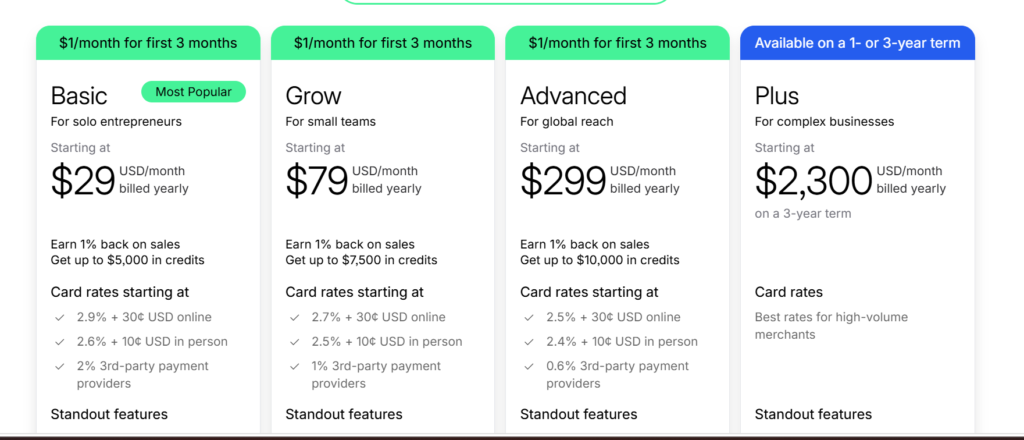
Shopify Pricing Packages (2026)
Pros and Cons of Shopify
✔ Pros
1. Extremely simple to get started
Create a working ecommerce store without knowing how to code.
2. Highly scalable
Shopify works for both small companies and enterprise-sized organizations.
3. Good checkout experience
One of the strongest points of Shopify.
4. Massive application ecosystem
Over 16,000 applications offer many possibilities for customization.
5. Great multichannel selling
Sell your products in online stores, physical stores, on the Shop platform, and more.
6. Advanced AI development
AI is becoming an integral part of Shopify store management, marketing, product discovery, and ecommerce.
7. Great ecommerce infrastructure
Ecommerce hosting, ecommerce security, and infrastructure are provided for you.
8. Advanced B2B functionality
B2B features are increasingly becoming available on different Shopify plans.
❌ Shopify Drawbacks
1. Subscription per month
You get a monthly platform cost even before you consider any additional costs.
2. Paid apps
The store may need a few paid apps depending on its growth.
3. Additional transaction fees
There might be some additional fees depending on your payment settings and plan.
4. Technical skills required in case of advanced customization
Even though Shopify is easy to use, advanced stores might require Liquid, JavaScript or developer assistance.
5. Suitable for not all businesses
For those who don’t have ecommerce as their primary source of revenue, sometimes WordPress/WooCommerce makes more sense.
Shopify Prices 2026
This Shopify Review 2026 would be incomplete without the most crucial section – pricing.
Shopify offers now:
• Basic
• Grow
• Advanced
• Plus
The price varies depending on your country, billing cycle, discounts and plan.
Typical Shopify US prices list now includes:
| Plan | Typical starting price |
| Basic | $29/month when billed yearly |
| Grow | $79/month when billed yearly |
| Advanced | $299/month when billed yearly |
| Plus | From around $2,300/month on a 3-year term |
The annual billing comparison of prices of Shopify has been done by Shopify itself, but Plus plan pricing has its own criteria.
Note: Check the Shopify pricing for your country from the official website prior to purchasing as there may be differences in pricing, taxes, payment fees, and offers.
Shopify Basic
Good for: Solo operators and startups.
Basic Plan comes equipped with all those tools necessary to get started in ecommerce business.
Basic Plan suits you the most when:
• You are a startup
• Running a small ecommerce shop
• It’s a side business
• A dropshipping newbie
Shopify Grow
Good for: Fast growing businesses and small teams.
Grow Plan comes handy when you have consistent revenues in your business.
It is a right choice when your business has enough revenues.
Shopify Advanced
Good for: Scalable ecommerce businesses.
Advanced plan is made for those businesses which need advanced reporting options, international features and advanced operation functionality.
Shopify Plus
Good for: Large businesses.
Shopify Plus is geared towards enterprise commerce.
It offers more sophisticated:
• Automation
• Customization
• International selling
• B2B functionalities
• Store management
• Support
It is far more expensive than regular Shopify accounts.
Is Shopify Worth It in 2026?
For Newbies
Yes.
Shopify is one of the most straightforward ways of creating an ecommerce website.
For Dropshippers
Yes, with a huge caveat.
While Shopify will give the website and backend, the profitability will depend on:
• Selection of products
• Quality of the supplier
• Advertising
• Customer service
• Pricing
• Shipping
Shopify even mentions how dropshipping allows suppliers to ship goods straight to the customer without the merchant keeping any stock.
For Small Business Owners
Yes.
Shopify gives a lot of ecommerce functionality without the need of a technical team.
For Established Brands
Absolutely.
Scalability, point of sale, apps, international tools, B2B features and enterprise-level solutions are there for established brands.
For Bloggers
Maybe.
If ecommerce is crucial for your blog, Shopify is amazing.
If you just want to create a blog and sell some goods occasionally, using WordPress/WooCommerce would probably be more cost-effective.
In light of my experience working with content creators and training students
From my experience working with content creators and teaching students, Shopify works best for those interested in growing their business from just promoting products online to establishing an ecommerce structure.
This can be shown by the ability to grow:
Product Idea → Shopify Store → Marketing → Customer → Order → Payment → Shipping
A content creator may integrate:
Blog/YouTube → Audience → Shopify Store → Product → Customer
Small businesses can grow from:
Social Media Selling → Online Store → Automated Ecommerce Process
Shopify’s greatest strength lies in allowing a beginner to focus more on sales and marketing rather than worrying about setting up all the technical systems.
Best Uses of Shopify
1. Ecommerce Business Startup
Establish a professional online store quickly.
2. Dropshipping
Build a storefront and connect suppliers using supported apps.
3. Retailer Business
Combine online and offline sales using Shopify POS.
4. DTC Brand
Build a customer relationship and manage the entire shopping process.
5. International Business
Grow into many markets, currencies, and countries.
6. B2B Business
Use Shopify’s growing native B2B feature for wholesale business.
7. Content Creators
Sell:
• Goods
• Digital goods
• Courses
• Physical goods
• Subscriptions
Shopify Alternatives in 2026
Shopify is great but doesn’t mean that it will always be the best solution.
WooCommerce
Best for: Users of WordPress sites that need full control and flexibility.
WooCommerce may work well for you if you already have a WordPress site.
The downside is that you’ll have to deal with all the hosting, support, plugins, and technicalities by yourself.
BigCommerce
Best for: Small ecommerce companies that need strong functionality.
Wix Ecommerce
Best for: Newbies that value design and simplicity.
Squarespace Commerce
Best for: Creative people and business where visual presentation matters.
Adobe Commerce
Best for: Companies with complex needs for customization.
Our Recommendation
Pick Shopify if you want to have the greatest simplicity, ecommerce features, scalability, apps, checkout, and multichannel solutions.
Pick WooCommerce if you prefer to have complete control of your WordPress site.
Consider opting for BigCommerce in case you need more inbuilt features for your ecommerce website rather than relying on apps. Consider opting for BigCommerce in case you need more inbuilt features for your ecommerce website rather than relying on apps.
Shopify vs WooCommerce
| Feature | Shopify | WooCommerce |
| Ease of setup | ⭐⭐⭐⭐⭐ | ⭐⭐⭐ |
| Hosting | Included | Separate |
| Ecommerce features | ⭐⭐⭐⭐⭐ | ⭐⭐⭐⭐⭐ |
| Customization | ⭐⭐⭐⭐ | ⭐⭐⭐⭐⭐ |
| Apps/extensions | ⭐⭐⭐⭐⭐ | ⭐⭐⭐⭐⭐ |
| Technical knowledge | Low–Medium | Medium–High |
| Scalability | ⭐⭐⭐⭐⭐ | ⭐⭐⭐⭐½ |
| Maintenance | Low | Higher |
| Best for | Most ecommerce businesses | WordPress users |
The fully managed nature of Shopify means that all hosting, security, and infrastructure is provided by Shopify, while WooCommerce may require hosting and extra management.
How to Make the Best out of Shopify
Step 1: Find a lucrative niche
Start with the customer and product, not the technology.
Step 2: Create a minimalist store
Avoid over-designing the store.
Step 3: Optimize the product pages
Use:
• Quality images
• Description
• Benefits
• Reviews
• Selling points
• Shipping details
• Effective calls to action
Step 4: Set up payment options
Specify the payments methods available and suitable for your target market.
Step 5: Install necessary apps only
Do not install hundreds of apps without knowing what they are needed.
Step 6: Create marketing system
Use:
• SEO
• Social media marketing
• Email marketing
• Paid ads
• Influencer marketing
• Content marketing
Step 7: Utilize Shopify analytics
Track:
• Traffic
• Conversions
• Average order size
• Customer acquisition
• Income
• Reorders
Step 8: Work with AI
Use Sidekick, Shopify Magic, and other AI commerce technologies.
Why Shopify Will Continue to Dominate in 2026
The reason for Shopify’s domination is not because of its current set of features alone.
It’s the ecosystem.
There are high switching costs.
When businesses have their products, customers, orders, apps, payments, analytics, and workflows all integrated within Shopify, switching to another service becomes a challenge.
And Shopify is spending big time on the future of ecommerce.
The Spring 2026 edition featured over 150 changes, and some of its main themes were agentic commerce, AI discovery, Shop, payments, marketing, retail, and B2B.
Focusing on the future makes Shopify highly competitive.
Final Verdict: Shopify Review 2026
After examining Shopify’s features, pricing, artificial intelligence capabilities, pros, cons, applications, and alternatives, we draw the following conclusion:
Shopify continues to be among the best ecommerce platforms in 2026—and for a lot of companies, it is still the most secure option.
Shopify’s biggest strength lies in the fact that it enables entrepreneurs to focus on their sales, not on their technology.
You can create:
Store → Products → Payments → Marketing → Customers → Orders → Analytics
in one environment.
Shopify is changing very quickly, too.
The platform is shifting from traditional ecommerce to AI-based product discovery, agentic commerce, omnichannel retail, native B2B, and automated marketing.
Nonetheless, Shopify is not a bargain.
It takes more money than the subscription alone to set up a proper store:
Shopify plan + payment fees + apps + marketing + domain + inventory + shipping
Therefore, the platform is most economically sound for the creation of a real business with potential to sell.
Final Rating: ⭐ 4.8/5
Suitable For: Ecommerce startups, entrepreneurs, dropshipping, retailers, direct-to-consumer brands, creators, and growing businesses.
Key Selling Point: Fully developed ecommerce solution.
Most important advantage for 2026: AI integration and omnichannel commerce.
Most important drawback: Total costs tend to get expensive as your store scales.
Bottom Line
Is Shopify worth it in 2026? Yes.
For those whose main priority is developing an ecommerce business, Shopify still offers one of the best platforms.
Begin with the Basic plan, validate your business idea, and upgrade to higher tiers as needed.
Avoid investing money in apps before acquiring your first customers.
Final Thoughts: Shopify Review 2026
⭐ 4.8/5 – Highly recommended for entrepreneurs and businesses seeking a scalable ecommerce platform.
Free Trial
Shopify provides a free trial period to try out its services.
Is It Worth the Money?
Absolutely if you are committed to developing a sustainable online business. The platform streamlines processes and mitigates technical complexities, making the investment worthwhile.
Call to Action